Velvet Scoter
Scientific name: Melanitta fusca
Family anatidae
Phenology
- Mainland
- Vagrant
- Madeira
- Absent
- Azores
- Vagrant
Conservation status
Learn more- Mainland
- Madeira
- Azores
- IUCN Global
Data
Presentation
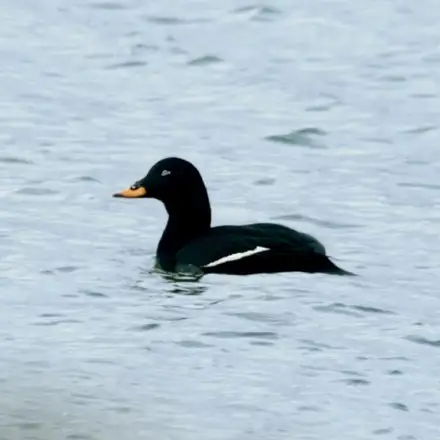
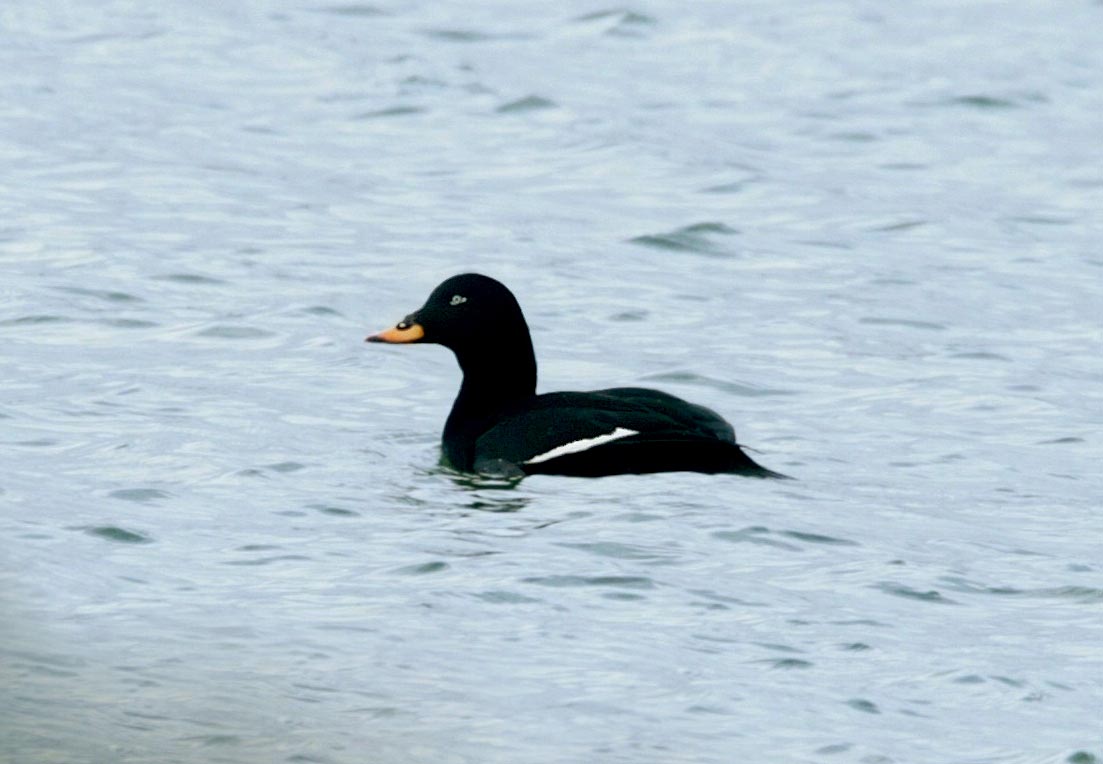
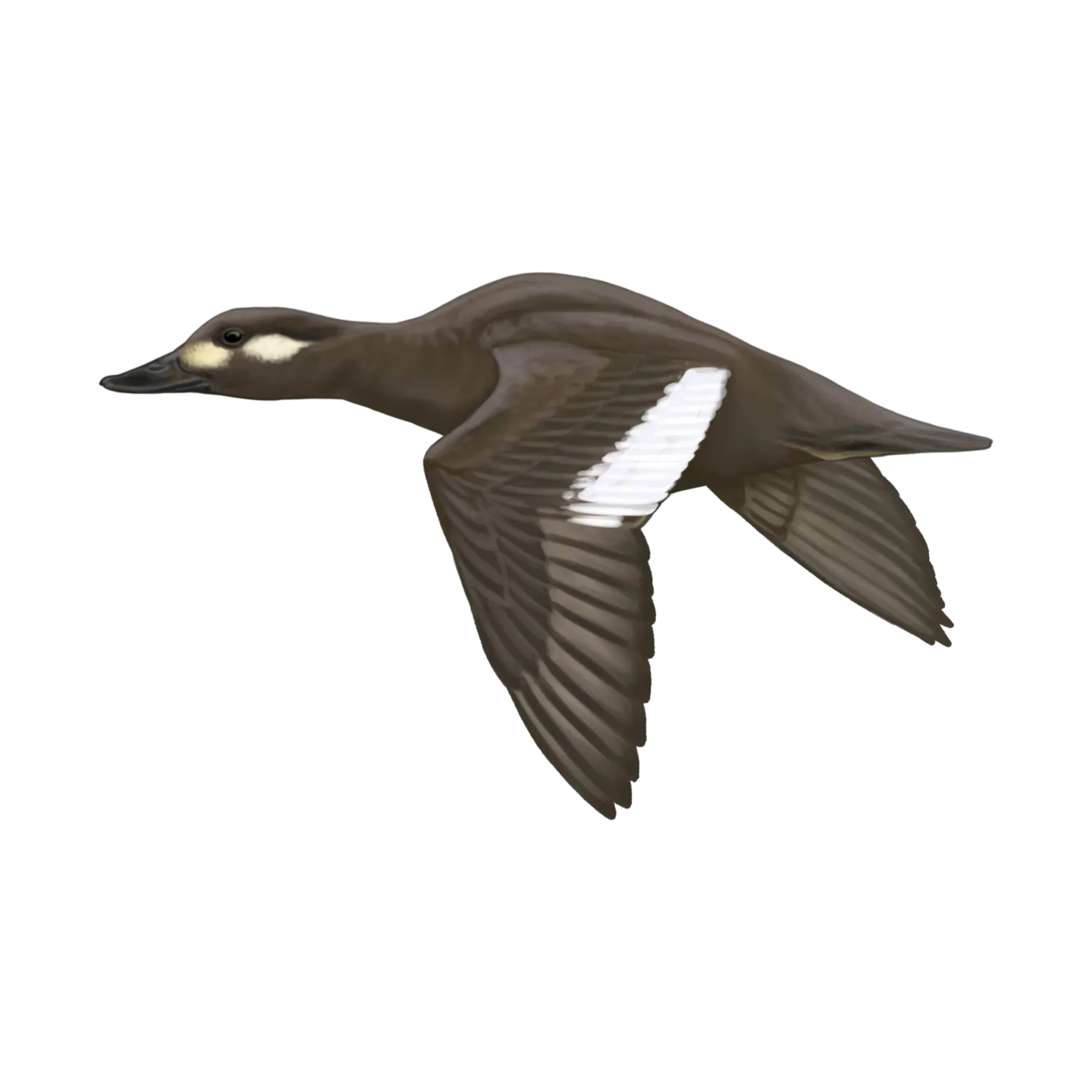
The Velvet Scoter breeds mainly in Scandinavia and in western and central Russia, wintering predominantly in the Baltic Sea and along the coasts of Western Europe (del Hoyo et al. 1992). The species is a vagrant on the Mainland and is absent from the archipelagos of Madeira and the Azores. Records of this duck in Portugal have all been made during the winter period, between December and March, mostly in estuarine environments and generally in the north of the country (CPR; Ornithological Reports).
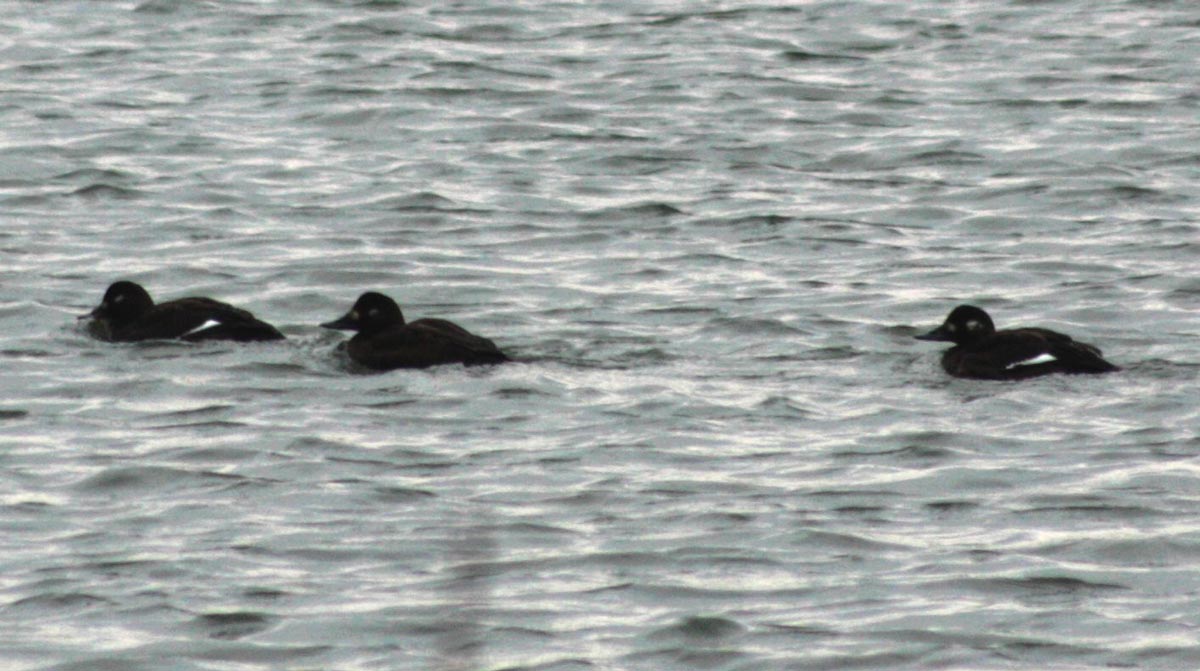
Some of these records may be linked to prolonged adverse weather conditions in northern Europe (Catry et al. 2010a). In the marine censuses carried out as part of this work, the species was recorded on three occasions (two of which were in the Ria de Aveiro), involving a total of 12 individuals. It should also be noted that this species is in sharp decline, particularly in the Baltic Sea, an area that is home to the majority of the species’ population (BirdLife International 2014). The Velvet Scoter is classified by the IUCN as ‘Endangered’ globally, in particular, due to threats in the marine environment and outside its breeding grounds. This sea duck is particularly vulnerable to contamination by hydrocarbons and other pollutants (the potential impact of which is significant, given that a large proportion of the global population winters in a small area) and to bycatch in fishing gear, particularly gillnets (Zydelis et al. 2013; BirdLife International 2014).
- Autor
Observations published in Ornithological Reports, see Book Atlas of Seabirds of Portugal – pp. 207. Bibliography:
Žydelis R, Small C & French G (2013). The incidental catch of seabirds in gillnet fisheries: a global review. Biological Conservation 162: 76-88. Bibliography:
Meirinho A, Barros N, Oliveira N, Catry P, Lecoq M, Paiva V, Geraldes P, Granadeiro JP, Ramírez I & Andrade J (2014). Atlas das Aves Marinhas de Portugal. Sociedade Portuguesa para o Estudo das Aves. Bibliography:
BirdLife International (2014). http://www.birdlife.org/europe-and-central-asia/european-red-list-birds-0 Bibliography:
Catry P, Costa H, Elias G & Matias R (2010a). Aves de Portugal, Ornitologia do Território Continental. Assírio e Alvim, Lisboa Bibliography:
Portuguese Rarities Committee Reports, see Book Atlas of Seabirds of Portugal – pp 207 Bibliography:
del Hoyo J, Elliott A & Sargatal J (eds.) (1992). Handbook of the birds of the world. Vol. 1. Lynx Edicions, Barcelona, Spain Glossary:
A static net, often nearly invisible and with variable mesh size, used to catch a wide variety of fish. It is set in the sea at varying depths and later retrieved. It is a non-selective fishing gear that frequently catches seabirds, marine mammals and reptiles. Glossary:
A period generally corresponding to the winter months, which may include part of autumn.